Protecting Your Bones While on Tamoxifen: A Patient's Guide to Understanding and Managing Osteoporosis Risk
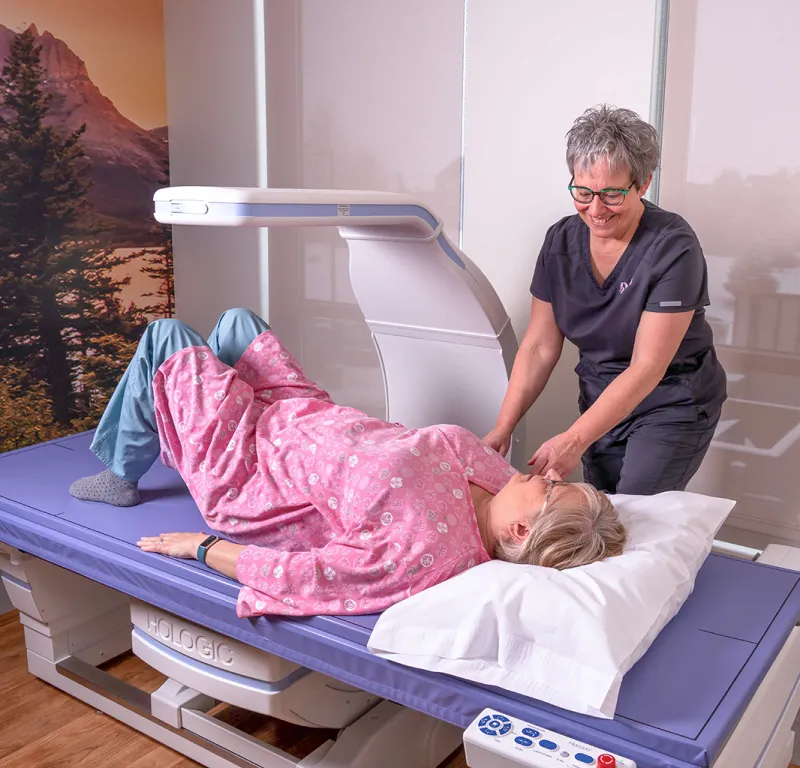
Photo: woman bone density DEXA scan medical clinic, via assets-global.website-files.com
For many patients prescribed tamoxifen as part of their breast cancer treatment, the conversation with their oncologist centers on tumor response, hormone receptor status, and the drug's well-established benefits in reducing recurrence. What receives far less attention—until a bone density scan reveals a problem—is tamoxifen's complex and sometimes contradictory relationship with skeletal health.
Understanding this relationship is not a matter of alarm. It is a matter of preparation. The more clearly patients grasp how tamoxifen interacts with bone tissue, the better equipped they are to ask the right questions, pursue appropriate monitoring, and adopt habits that protect long-term bone integrity.
The Paradox at the Center of Tamoxifen's Bone Effects
Tamoxifen belongs to a class of drugs known as selective estrogen receptor modulators, or SERMs. The word "selective" is key: tamoxifen does not uniformly block or mimic estrogen throughout the body. Instead, it acts differently depending on the tissue type it encounters.
In bone tissue, tamoxifen behaves as an estrogen agonist—meaning it partially mimics estrogen's bone-protective effects. For postmenopausal women, whose natural estrogen levels have already declined significantly, this agonist activity can actually help preserve bone mineral density. Studies have shown that postmenopausal women on tamoxifen may experience modest improvements in spinal bone density compared to those not taking the drug.
For premenopausal women, however, the picture is quite different. In women who still have active estrogen production, tamoxifen's partial blocking of estrogen receptors can interfere with the hormone's natural bone-preserving role. Research has consistently demonstrated that premenopausal patients on tamoxifen are at greater risk for bone density loss over the course of their five- to ten-year treatment course. This is the paradox: the same drug that may protect bones in one population can accelerate bone loss in another.
Why This Matters: Fracture Risk Over a Lifetime
Bone density loss does not cause immediate symptoms. It is a silent process, which is precisely what makes it so easy to overlook during cancer treatment, when patients are managing fatigue, hot flashes, and a host of other concerns. But the downstream consequences of unchecked bone loss can be significant.
Osteoporosis—defined as a bone mineral density T-score of -2.5 or lower—substantially increases the risk of fractures, particularly of the hip, spine, and wrist. Hip fractures in particular carry serious implications for mobility, independence, and quality of life. For younger breast cancer survivors who may live several decades post-treatment, maintaining bone health is not a peripheral concern—it is a central one.
The cumulative effect of years on tamoxifen, combined with other risk factors such as low baseline calcium intake, sedentary lifestyle, smoking, or a family history of osteoporosis, can compound this risk meaningfully.
Screening: When to Ask for a Bone Density Test
A dual-energy X-ray absorptiometry scan, commonly called a DEXA scan or DXA scan, is the standard clinical tool for measuring bone mineral density. It is painless, quick, and delivers very low radiation exposure.
Current guidelines from organizations including the American Society of Clinical Oncology recommend that premenopausal women starting tamoxifen have a baseline bone density assessment before or shortly after initiating treatment. This baseline measurement becomes the reference point against which future scans are compared, allowing clinicians to detect and respond to changes early.
For postmenopausal women, the calculus is somewhat different. Because tamoxifen may offer modest bone protection in this group, routine baseline scanning is still advisable—particularly for those with additional osteoporosis risk factors—but the urgency of frequent follow-up may be lower.
Patients should not wait for their oncologist to raise this topic. Proactively asking, "Should I have a bone density scan before I start tamoxifen?" is entirely appropriate and reflects the kind of engaged partnership that leads to better outcomes.
Calcium, Vitamin D, and the Nutritional Foundation of Bone Health
Regardless of menopausal status, ensuring adequate calcium and vitamin D intake is a foundational strategy for anyone on tamoxifen.
The National Osteoporosis Foundation recommends that women under 50 consume 1,000 milligrams of calcium daily, while women 50 and older should aim for 1,200 milligrams. Dietary sources—dairy products, fortified plant milks, leafy greens such as kale and bok choy, and canned fish with bones—are generally preferred over supplements, as food-based calcium is better absorbed and does not carry the cardiovascular concerns associated with high-dose calcium supplementation.
Vitamin D is equally critical, as it facilitates calcium absorption in the gut. Many Americans are deficient in vitamin D without knowing it, particularly those in northern states with limited sun exposure during winter months. A blood test can determine current vitamin D levels, and most oncology teams recommend maintaining levels above 30 ng/mL. Supplementation with vitamin D3, typically in the range of 1,000 to 2,000 IU daily, is commonly advised—though patients should confirm the appropriate dose with their physician.
Exercise as a Bone-Protective Strategy
Physical activity is one of the most powerful non-pharmacological tools for preserving bone density, and it carries the added benefit of supporting cardiovascular health, mental well-being, and energy levels during treatment.
Weight-bearing aerobic exercise—activities in which you support your own body weight against gravity—stimulates bone formation. Walking, jogging, dancing, hiking, and low-impact aerobics all qualify. Resistance training, which involves working muscles against an external load through free weights, resistance bands, or weight machines, is particularly effective at building bone density in the spine and hips, two areas of significant concern for osteoporosis.
The American College of Sports Medicine recommends that adults engage in at least 150 minutes of moderate-intensity aerobic activity per week, along with two or more sessions of muscle-strengthening exercise. For cancer patients, modifications may be necessary based on treatment-related fatigue or physical limitations—a physical therapist with oncology experience can help design a program that is both safe and effective.
When Lifestyle Measures Are Not Enough: Medications and Specialist Referral
For premenopausal patients with significant bone density loss documented on DEXA scanning, lifestyle measures alone may be insufficient. In these cases, oncologists may consider prescribing bisphosphonates—a class of medications that slow bone breakdown. Drugs such as alendronate (Fosamax) and risedronate (Actonel) are commonly used in this context and have a well-established safety record.
It is important to have this conversation before bone loss becomes severe. Patients whose DEXA results show osteopenia—a T-score between -1.0 and -2.5, representing below-normal but not yet osteoporotic bone density—are at a decision point where intervention can be most effective.
A referral to an endocrinologist or a rheumatologist with expertise in metabolic bone disease may also be warranted for patients with complex risk profiles or significant bone density decline.
Taking Ownership of Your Bone Health
Tamoxifen is a life-saving medication for many patients, and its benefits in reducing breast cancer recurrence are well-documented. Acknowledging its potential effects on bone density is not a reason to fear the drug—it is a reason to monitor thoughtfully and act preventively.
Patients who schedule their baseline DEXA scan, optimize their calcium and vitamin D intake, commit to a consistent exercise routine, and maintain an open dialogue with their oncology team are doing everything within their power to protect their skeletal health over the long term. That kind of proactive engagement is precisely what comprehensive cancer care looks like.